Describe the Classification of Epithelial Tissue
Goblet cells have mucosal membranes. Cell shapes can be squamous flattened and thin cuboidal boxy as wide as it is tall or columnar rectangular taller than it is wide.
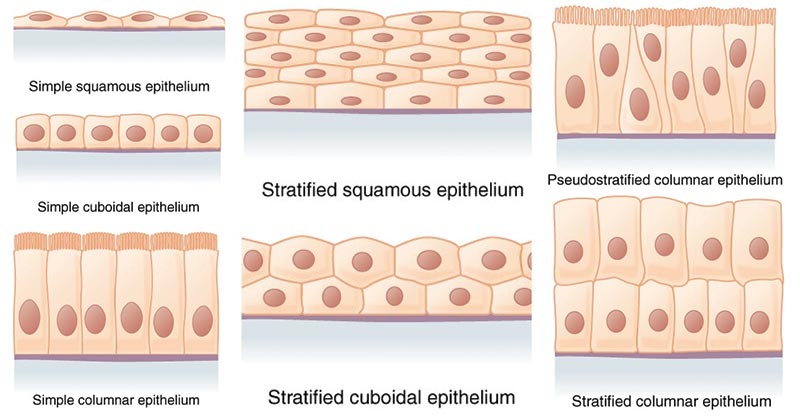
Epithelial Tissue Definition Types Functions Examples
Epithelial Cell Mainly has Two Types of Membrane.
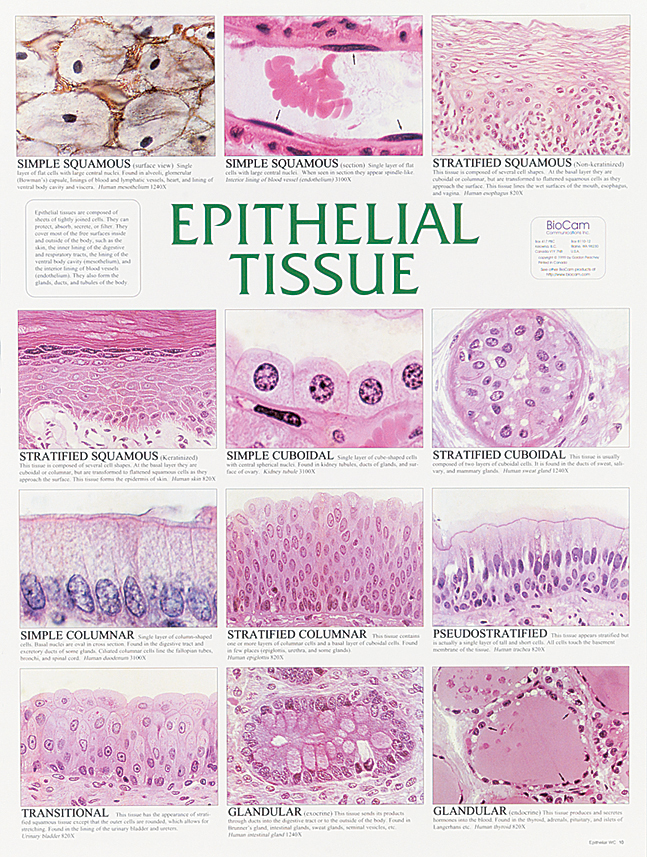
. Thyroid Salivary epithelial tissue are examples of glandular epithelium whose function is secretion. Epithelial tissue is a highly cellular tissue that overlies body surfaces lines cavities and forms glands. Contains cells that appear square in cross-section but are marginally longer than they are wide.
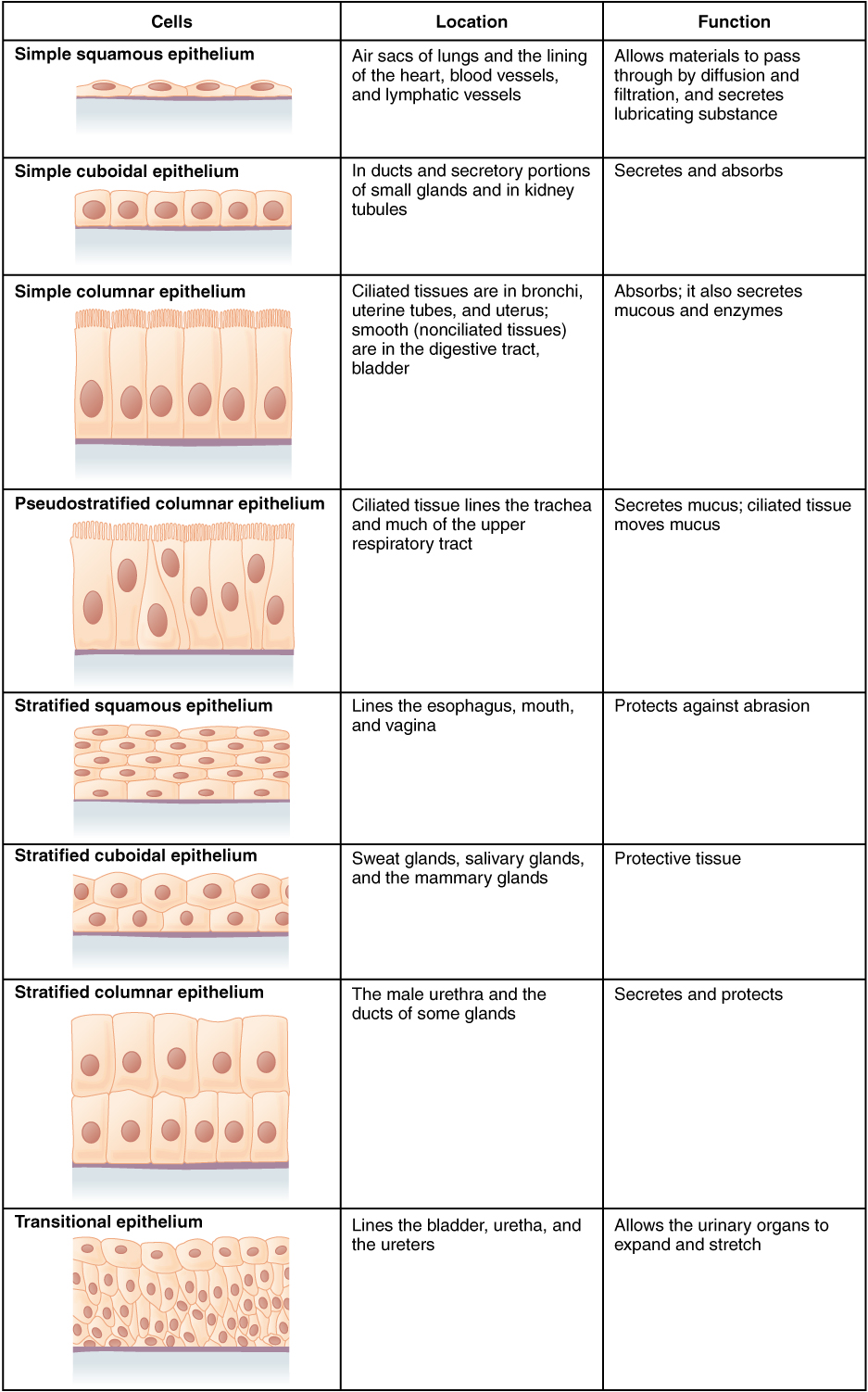
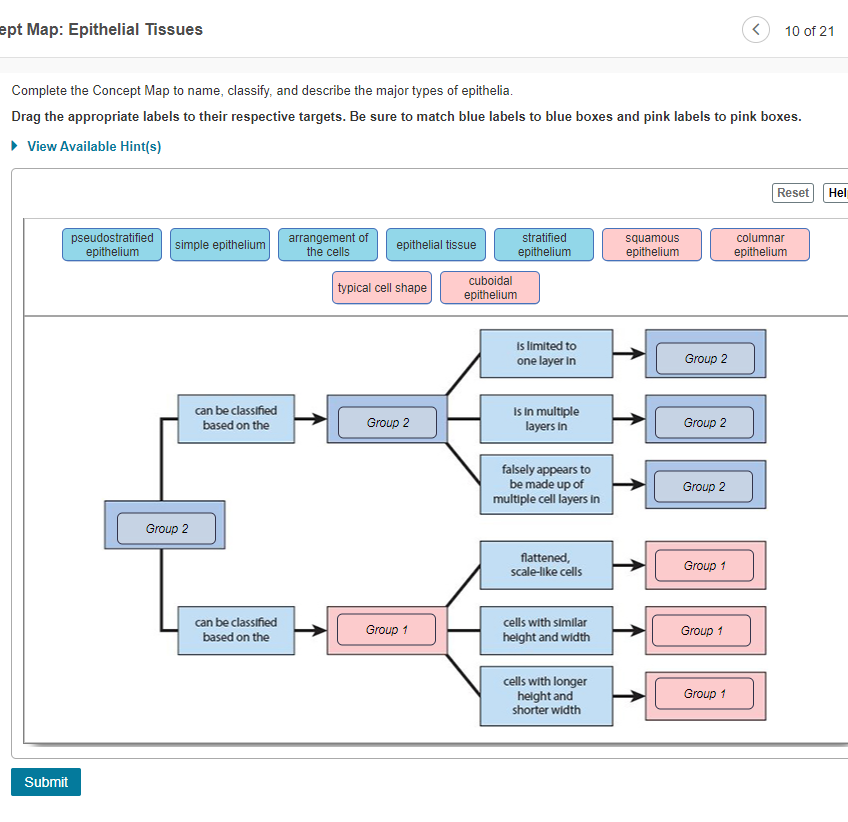
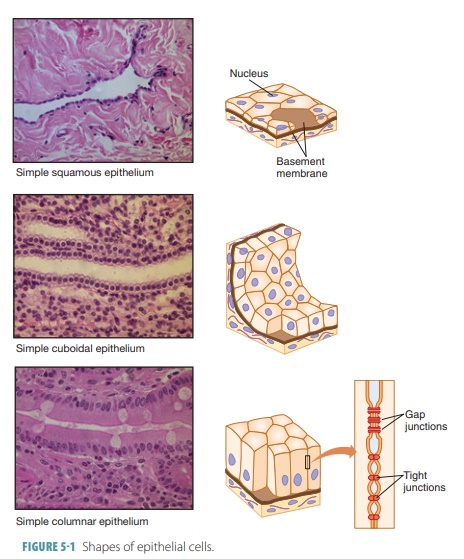
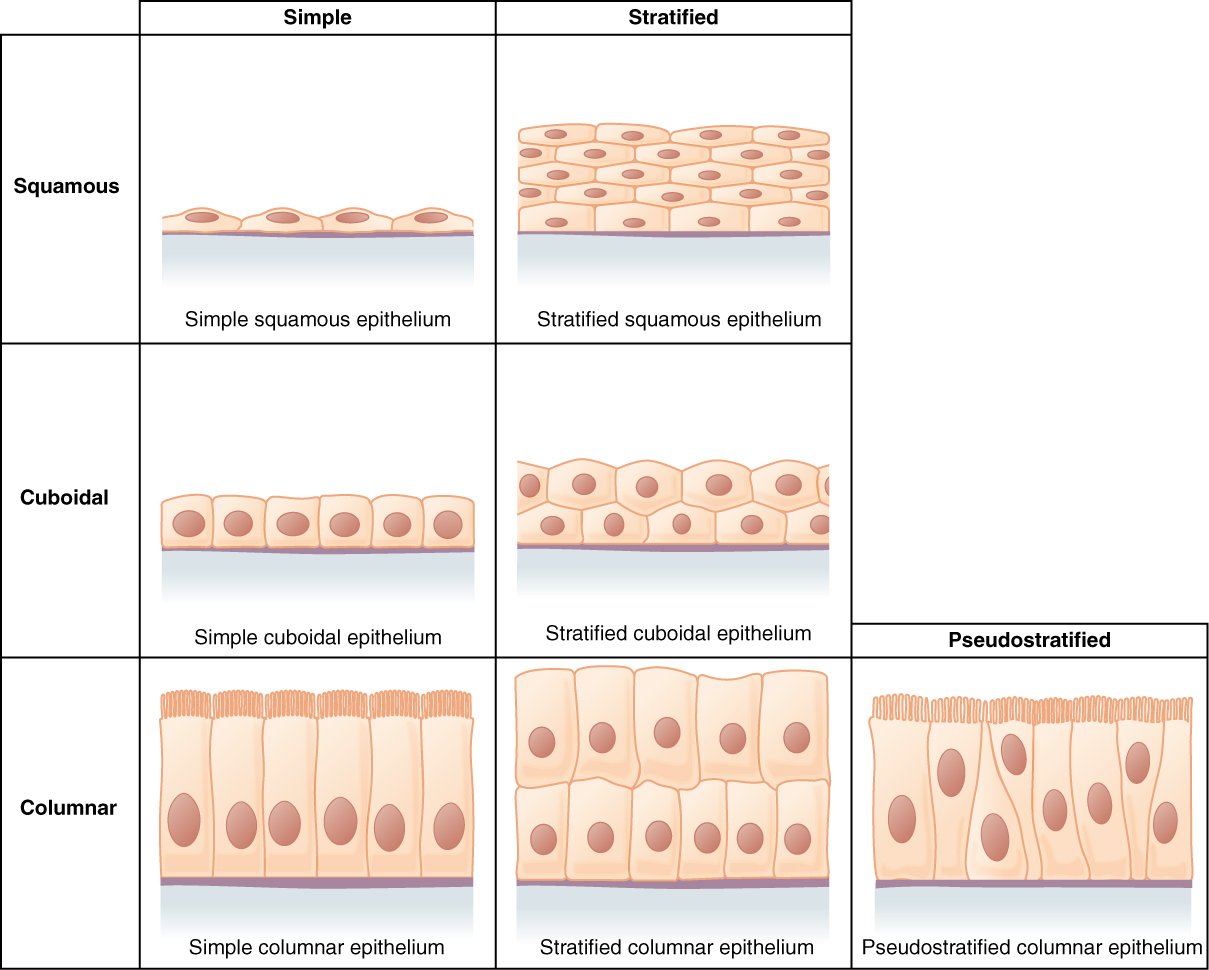
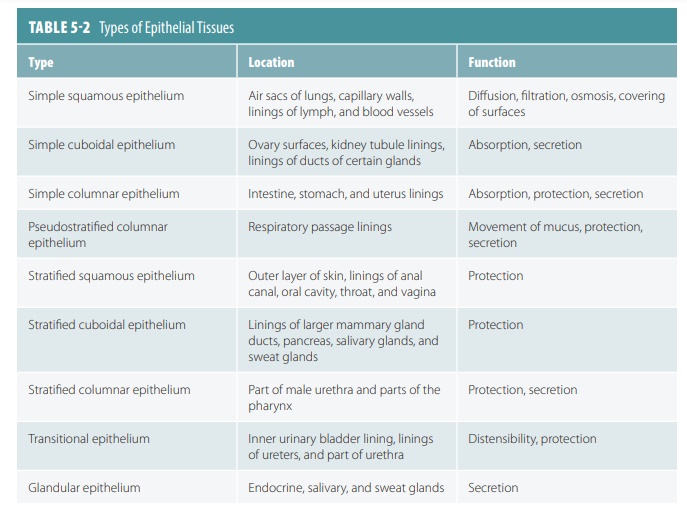
Cuboidal epithelium has cells whose height and width are approximately the same. 1 By shape a squamous - flat and scale-like b cuboidal - as tall as they are wide c columnar - tall column-shaped 2 By cell arrangement a simple epithelium - single layer of cells usually for absorption and filtration b stratified epithelium - stacked up call layers protection from abrasion rubbing - mouth skin. In this example we see air sacs of lungs.
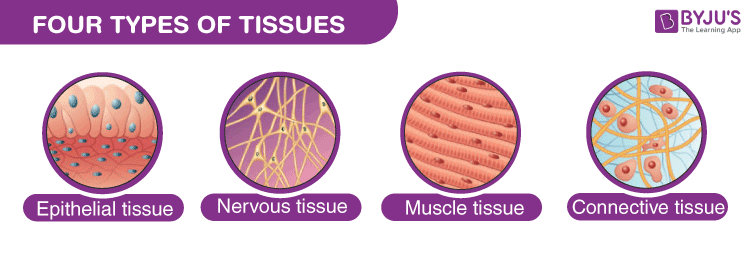
Squamous epithelium has cells that are wider than they are tall. Simple columnar epithelium lines the stomach and intestines. Connective tissue as its name implies binds the cells and organs of the body together.
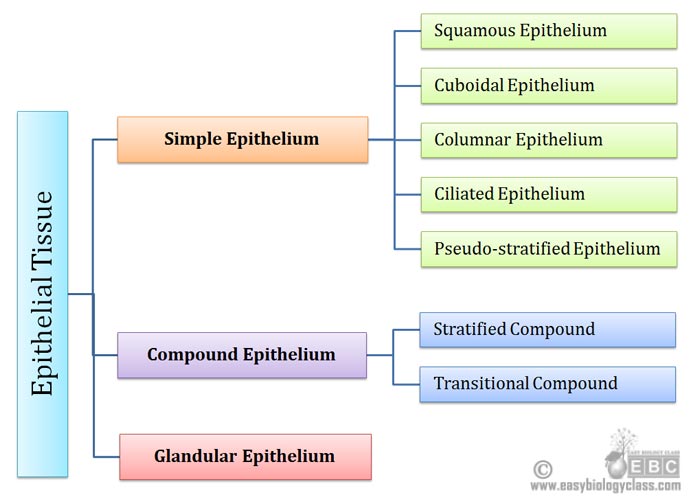
Squamouscells are wider than tall plate-like squashed. The epithelial tissues are broadly classified into three types. 5 rows Types of epithelial tissue Epithelial tissue is classified based on the cell shape and the.
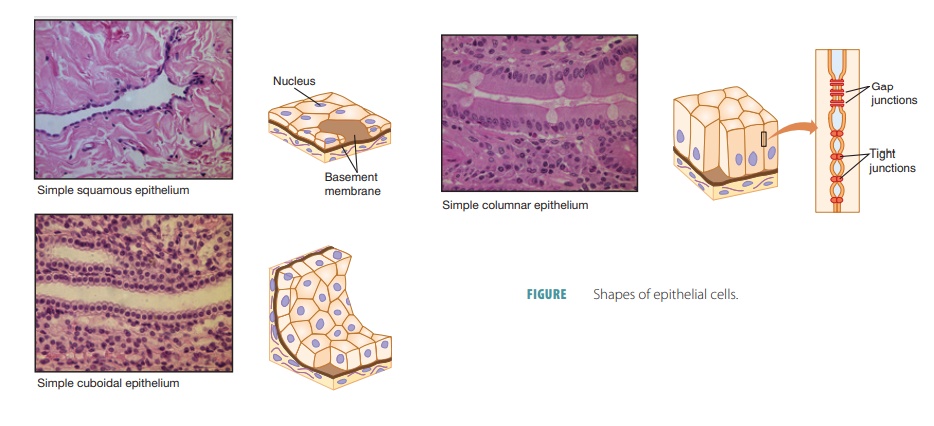
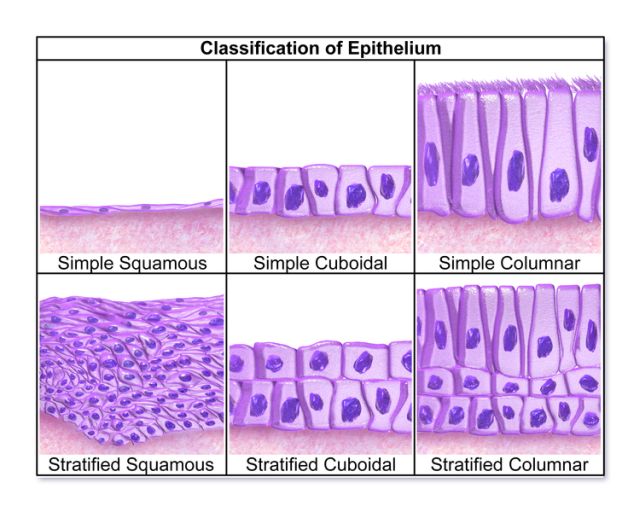
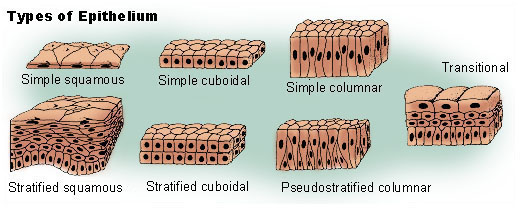
Consists of elongated cell involved in absorption of materials. Cellular nature Cells in epithelium fit closely together side by. Classification of Epithelial Tissues Epithelial tissues are classified according to the shape of the cells composing the tissue and by the number of cell layers present in the tissue Figure 422 Cell shapes are classified as being either squamous flattened and thin cuboidal boxy as wide as it is tall or columnar rectangular taller than it is wide.
Cell shapes can be squamous flattened and thin cuboidal boxy as wide. Iii Simple columnar epithelium which consists of long column-shaped cells iv Pseudostratified Epithelium which really. Characteristics and classification scheme and types epithelial tissue.
Epithelial tissue refers to groups of cells that cover the exterior surfaces of the body line internal cavities and passageways and form certain glands. We find these types of cells in kidney tubules. Classification of Epithelial Tissues.
It is also known as mucosal cells. Single layer of cube shaped cells. The four types of tissue in the body are epithelial connective muscle and nervous.
Epithelial tissues are classified according to the shape of the cells and number of the cell layers formed Figure. Characteristics of epithelium tissue. Earths Lab Membranous epithelium covers and lines the external surface of our body as well as lining all internal cavities organs tubes and passageways.
They mainly line body cavities which mainly open inside not outsides. We can divide epithelial tissue into two types. There are three principal classifications associated with epithelial cells.
Classification of Epithelial Tissues. Cell shapes can be squamous flattened and thin cuboidal boxy as wide as it is tall or columnar rectangular taller than it is wide. Epithelial Tissue Types.
It is avascular but innervated. Membranous epithelium and glandular epithelium. Epithelial tissues are classified according to the shape of the cells and number of the cell layers formed.
Columnarcells are taller than they are wide like columns. Simple cuboidal epithelium is found in glandular tissue and in the kidney tubules. They are mainly.
Ii Simple cuboidal epithelium consisting of cuboidal cells cuboidalcube-like. Epithelial cells exist in close apposition forming a barrier between connective tissues and free surfaces. Found in most of the digestive tract like the stomach.
Muscle tissue contracts forcefully when excited providing movement. Epithelial cells may be squamous cuboidal or columnar in shape and may be arranged in single or multiple layers. Epithelial tissue is made of layers of cells that cover the surfaces of the body that come into contact with the exterior world line internal cavities and form glands.
Epithelial tissues are classified according to the shape of the cells and number of the cell layers formed Figure 2. SIMPLE UNILAMINAR EPITHELIA. Consists of extremely thin cells that resemble the scales of a fish.
Cuboidalcells are as wide as tall like cubes. Squamous epithelial tissue. I Simple squamous epithelium which is composed of flat cells.
Classification of Epithelial Tissues. This type of tissue makes up functional units of the thyroid gland salivary glands. An epithelium is a sheet of cells that covers a body surface or lines a cavity.
Epithelial Tissues Types Functions Characteristics Shape Structure Epithelia Epithelium
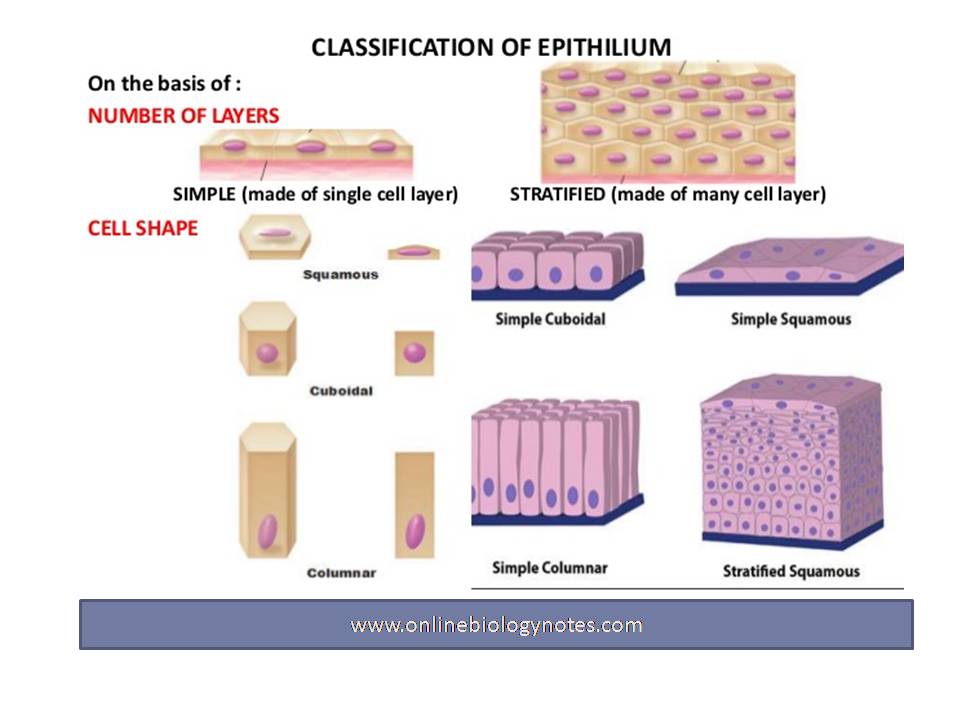
Epithelial Tissue Characteristics And Classification Scheme And Types Online Biology Notes
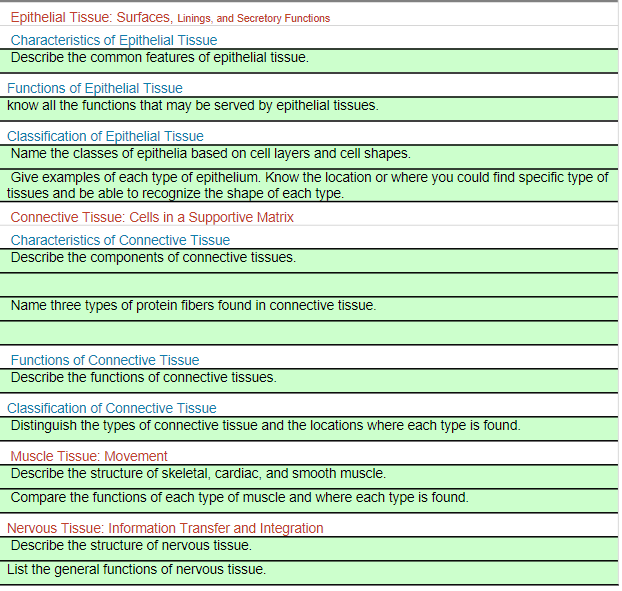
Solved Epithelial Tissue Surfaces Linings And Secretory Chegg Com

Classification Of Epithelial Tissue Diagram Quizlet
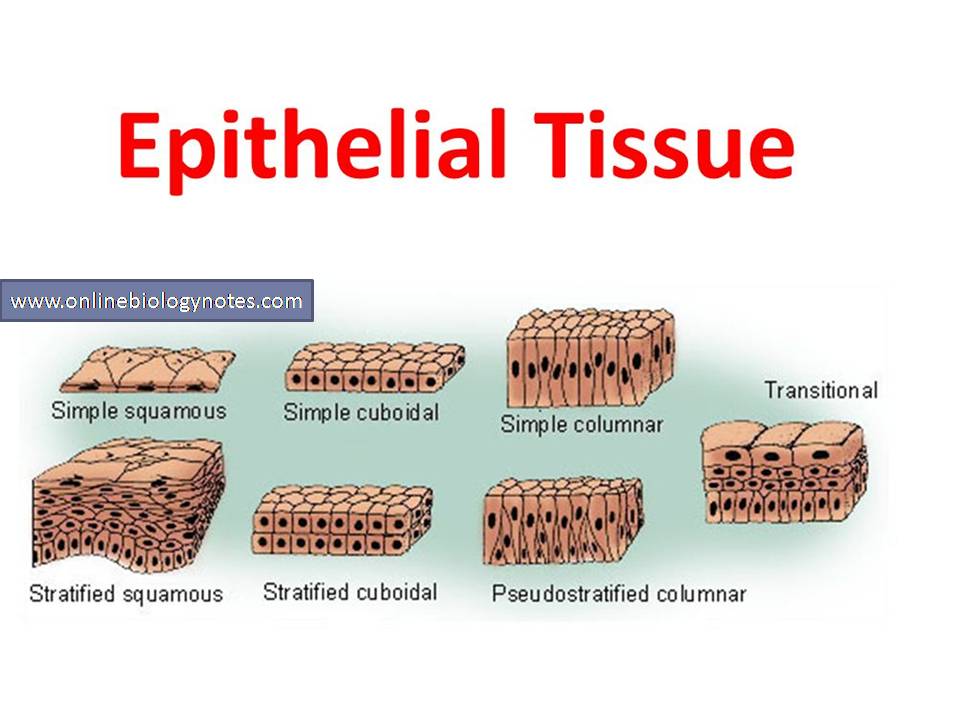
Epithelial Tissue Characteristics And Classification Scheme And Types Online Biology Notes
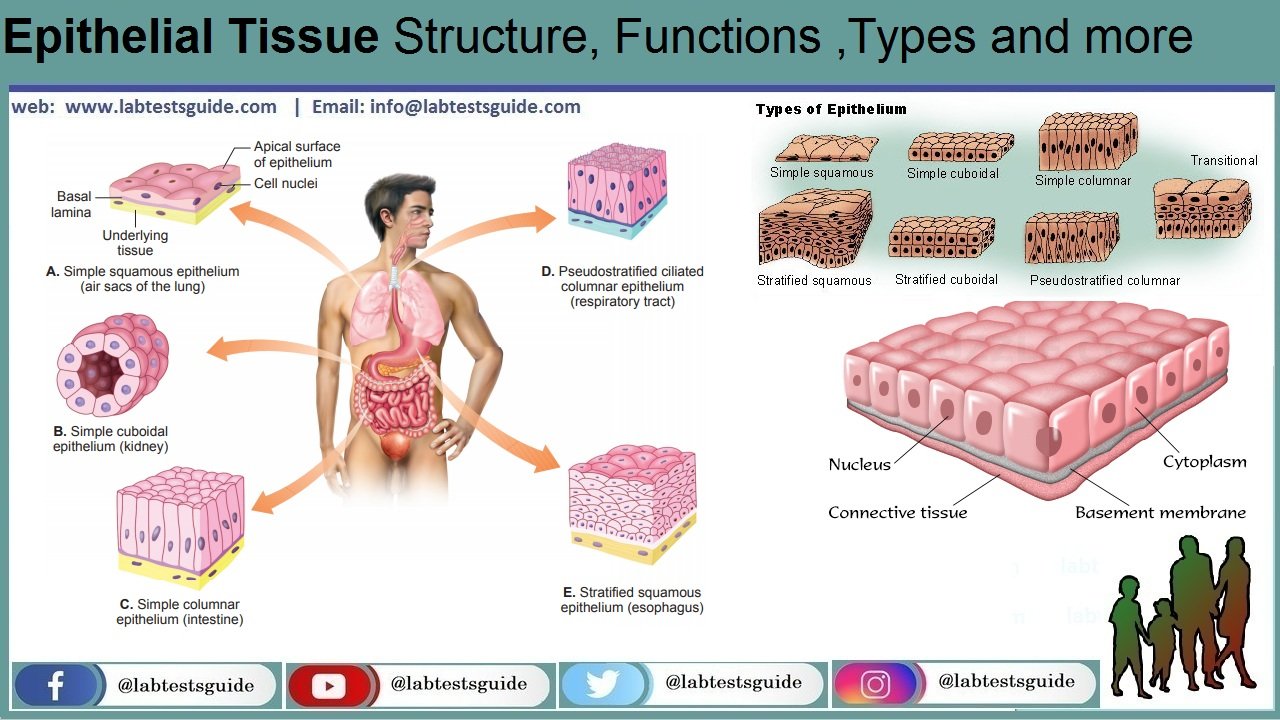
Epithelial Tissue Structure Functions Types And More Lab Tests Guide
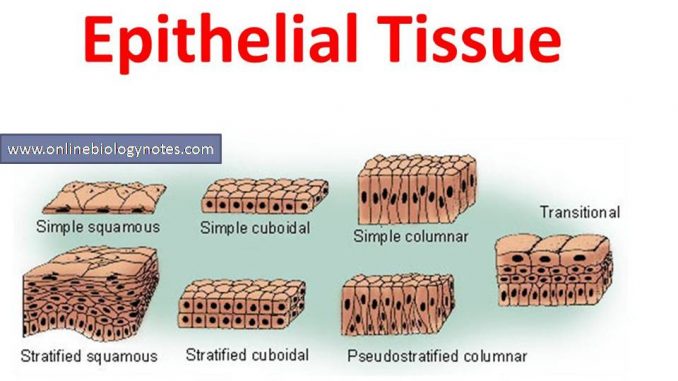
Epithelial Tissue Characteristics And Classification Scheme And Types Online Biology Notes
Epithelial Tissue Anatomy And Physiology
Solved Ept Map Epithelial Tissues 10 Of 21 Complete The Chegg Com
Types Of Epithelial Cells With Examples Easy Biology Class
Epithelial Tissues Types Functions Characteristics Shape Structure Epithelia Epithelium
Epithelial Tissue Chart Flinn Scientific

Describe The Structure And Function Of Different Types Of Epithelial Tissues Draw Diagram Of Each Type Of Epithelial Tissue Biology Q A
Epithelial Tissue Anatomy And Physiology

Epithelial Tissue What Is It Where It S Found And More Osmosis
Epithelial Tissues Types Functions Characteristics Shape Structure Epithelia Epithelium
Lab 4 Tissues Spring2021 Crn 22246 Biol110m Section Zz2 Anatomy Physiology I
Types Of Epithelial Tissue
Seer Training Epithelial Tissue


Comments
Post a Comment